

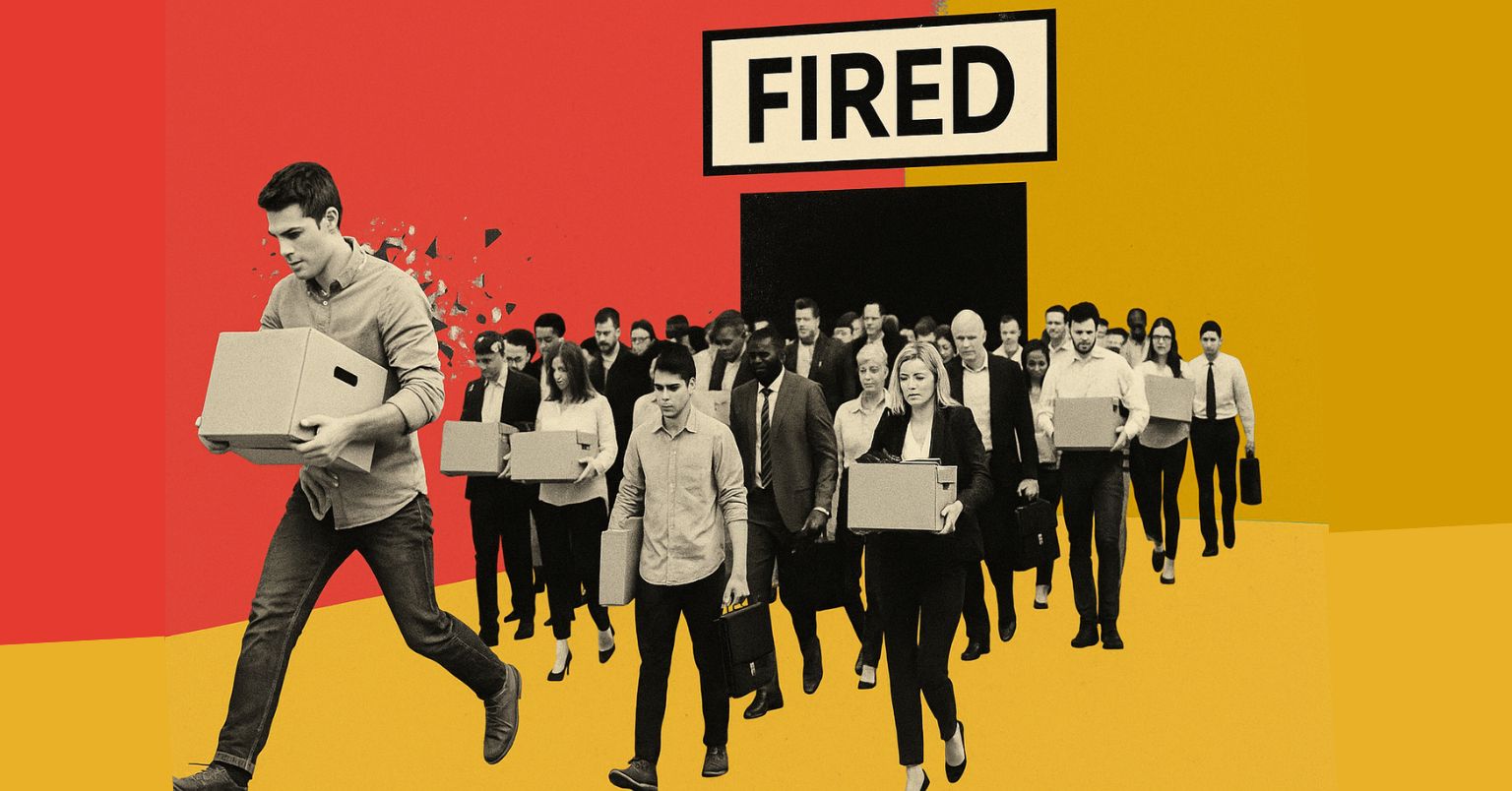
Will AI Replace Your Job? What the Future of Work Really Looks Like
AI is automating tasks across every industry. Here's an honest look at which jobs are at risk, which are safe, and how workers and businesses can adapt.
Published by Hike Up Team
26 Jul 2026
4 min read
The Real Question Isn't "Will AI Take My Job?"
Headlines love to frame this as a simple yes-or-no question, but the honest answer is more nuanced: AI won't replace most jobs outright — it will replace specific tasks within them. The jobs that change the most are the ones built almost entirely out of repetitive, predictable tasks. The ones that survive are built on judgment, context, and trust — things that are much harder to automate than a single task in isolation.
What the Research Actually Says
It's easy to find alarming headlines about AI and jobs, but the actual research from major institutions paints a more layered picture than "robots are coming for everyone."
- According to the World Economic Forum's Future of Jobs Report, an estimated 83 million jobs may be displaced by 2027, while roughly 69 million new roles are created in the same period — a net loss, but far from mass unemployment.
- The McKinsey Global Institute has estimated that up to 375 million workers worldwide, around 14% of the global workforce, may need to switch occupational categories by 2030 as automation reshapes their roles.
- A widely cited Goldman Sachs research note estimated that generative AI could expose the equivalent of 300 million full-time jobs to some degree of automation globally — while also projecting it could lift global GDP by roughly 7% over a decade through productivity gains.
- PwC's long-running automation research has found that job risk varies heavily by education level: workers with only a high school education face meaningfully higher automation risk than those with university degrees, since manual and routine tasks are easier to automate than analytical ones.
- The OECD has found that around 14% of jobs across its member countries are highly automatable, while another 32% could see substantial changes to how they're performed, without disappearing outright.
- Economist James Bessen's research at Boston University on bank tellers is a favorite case study among labor economists: after ATMs were introduced, the number of bank teller jobs in the U.S. actually grew for decades, because banks could afford to open more branches at a lower cost per branch — shifting tellers toward relationship-building and sales instead of counting cash.
Jobs Most Exposed to Automation
| Role | Why |
|---|---|
| Data Entry Clerks | Repetitive, rule-based tasks AI already handles well |
| Basic Customer Support | Chatbots resolve common queries faster and cheaper |
| Copy Editors & Proofreaders | AI writing tools catch grammar and style issues instantly |
| Bookkeepers | Automated software now handles routine reconciliation |
| Telemarketers | AI voice agents can run outbound calls at scale |
Industries Feeling the Impact First
| Industry | Impact |
|---|---|
| Customer Service | AI chatbots and voice agents handle a growing share of tier-1 support tickets |
| Finance & Accounting | Automated reconciliation, fraud detection, and financial reporting |
| Manufacturing | Robotics and predictive maintenance reduce manual inspection roles |
| Retail | AI-driven inventory forecasting and personalized recommendations |
| Legal Services | AI tools speed up contract review, discovery, and legal research |
The Jobs AI Struggles to Replace
AI is excellent at pattern recognition and repetition. It's far weaker at judgment calls, physical dexterity in unpredictable environments, and building genuine human trust. A large language model can draft a contract in seconds, but it can't sit across the table and negotiate one, read a client's hesitation, or take responsibility when a decision goes wrong — and that accountability gap is exactly where most "AI-proof" careers live.
Where Human Skills Still Win
| Skill | Example |
|---|---|
| Complex Problem-Solving | Diagnosing an unusual medical case or legal dispute |
| Emotional Intelligence | Therapy, counseling, and high-stakes negotiations |
| Creative Strategy | Building a brand identity or long-term business vision |
| Hands-On Trades | Plumbing, electrical work, and on-site repairs |
| Leadership & Accountability | Making judgment calls someone has to own |
How AI Is Changing Jobs, Not Just Cutting Them
For most industries, AI is showing up as a co-worker rather than a replacement. It handles the repetitive 60%, freeing people to focus on the judgment-heavy 40% that actually needs a human. This is consistent with the historical pattern researchers like Bessen have documented: automation tends to redefine what a job is long before, and often instead of, eliminating the job entirely.
New Roles Emerging Because of AI
- AI Prompt & Workflow Designers – Building efficient processes around AI tools.
- AI Quality & Ethics Reviewers – Checking outputs for bias, accuracy, and compliance.
- Human-in-the-Loop Specialists – Reviewing and approving AI-generated decisions.
- Automation Strategists – Identifying which tasks should (and shouldn't) be automated.
How to Future-Proof Your Career
Adapting doesn't mean becoming a programmer overnight. It means building the kind of judgment and skills AI can't easily replicate.
| Step | Action |
|---|---|
| Learn the Tools | Get hands-on with AI tools relevant to your field |
| Double Down on Soft Skills | Communication, leadership, and empathy grow more valuable, not less |
| Specialize | Niche expertise is harder to automate than general tasks |
| Stay Curious | Treat AI literacy as an ongoing skill, not a one-time course |
The Takeaway: Adapt Alongside AI, Don't Compete Against It
The future of work isn't humans versus AI — it's humans who use AI versus humans who don't. Businesses and workers who treat AI as a tool for leverage, rather than a threat to outrun, will be the ones who come out ahead.
About the author
The Hike Up Team of marketers and developers sharing insights on how AI is reshaping the future of work.

Hike Up Team